Soft skills are the ones that decide how your day actually goes.
Short, practice-based courses paired with an AI coach, built to fix the specific skill that's costing you the most right now.
Nothing you avoid stays where you left it.
Watch what one avoided conversation actually costs you.
DIFFICULT CONVERSATIONS
One convo avoided →
SELF-MANAGEMENT
A week of festering →
SELF-MANAGEMENT
Convo handled badly →
DECISION INTELLIGENCE
Input stops flowing →
EMERGING LEADER
The team learns to avoid too.
One avoided conversation just crossed every skill area you have.
That is the cascade.
It runs both directions: fix the first thing and the other four quietly stop happening.
The Four Clusters
The need for soft skills doesn't show up one at a time.
We mapped the soft skills employers actually ask for, then pressure-tested them against how work runs now. Remote teams, hybrid schedules, and a decade of conversations moving into chat windows raised the stakes on nearly all of them, because you no longer get the hallway, the read of the room, or the benefit of the doubt.
What we found is that these skills don't stand alone. They cluster, and the ones inside a cluster tend to fail together and improve together. We built each Lab around one of those clusters, so you train the way the skills actually behave.
That's where the four Labs came from. One Lab per cluster.
Self-Management
Self-regulation*
Emotional intelligence*
Prioritization*
Coachability*
Attention to detail*
Resilience*
Adaptability*
Self-directed learning*
Internal motivation*
Emotional clarity*
Growth mindset
Time management
Organization
Work ethic
Humility
Planning
Mindset shift
Became the ... Self-Management Lab™ ➝
Communication & Interpersonal
Empathy*
Active listening*
Emotional intelligence*
Giving feedback*
Receiving feedback*
Self-regulation*
Conflict resolution*
Negotiation
Teamwork
Collaboration
Relationship building
Influence
Public speaking
Networking
Reading a room
Charisma
Communicate concisely
Connection
Social stamina
Became the ... Difficult Conversations Lab™ ➝
Cognitive & Critical Thinking
Decision making*
Critical thinking*
Problem-solving*
Analytical thinking*
Discernment*
Reducing complexity*
Delegating to AI*
Continuous learning
Versatility
© TEAM Solutions
Became the ... Decision Intelligence Lab™ ➝
Leadership & Strategic
Leadership*
Delegation*
Judgment*
Developing others*
Setting expectations*
Coaching*
Accountability*
Influence
Motivating others
Strategic adaptability
Cultural intelligence
The capstone.
It doesn't reteach the other three - it aims them at leading people.
Became the ... Emerging Leader Lab™ ➝
*Trained directly through the Lab's course and AI coach.
Four clusters. Four Labs. Start with the one costing you most.
AI can't teach you this part.
Those come from positive reps, and positive reps are the one thing traditional training likely never gave you.
So what is a Lab?
A Lab is a place to practice. Not a course you watch.
Learn it.
Short, plain lessons. No theory dumps, no hour-long videos.
Practice it.
An AI coach you run the hard moment against. Fumble it, run it again. No scheduling, no audience, no consequences.
Prove it.
A certificate you earn, not one you're handed.
Short topics you can finish in one sitting.
Unlimited practice with your coach for the length of your access.
Four Labs. Start where it hurts.
Read the four lines under each Lab. Pick the one where you nod the most.
Self-Management Lab
Sounds like you?
- I'm reactive and overwhelmed - composure is the first thing to go.
- My days and weeks run me instead of the other way around.
- I know what to do, I just do not do it consistently enough.
- Stress leaks into how I show up, and it impacts everyone around me.
This is the foundation the other three Labs stand on. Not sure where to start? Start here.
Difficult Conversations Lab
Sounds like you?
- Hard conversations either get avoided or blow up when I have them.
- I get talked over, or I over-explain and lose the room.
- Feedback I give lands wrong, and feedback I get puts me on the defensive.
- I can see the problem clearly but not the people in the room.
You'll also lean on composure and emotional control from the Self-Management Lab.
Decision Intelligence Lab
Sounds like you?
- I circle the same decision for days and still second-guess it.
- I drown in data and cannot tell the signal from the noise.
- I make the call, then cannot explain why I made it.
- Complex problems freeze me instead of focusing me.
You'll also lean on staying steady under pressure from the Self-Management Lab.
Emerging Leader Lab
Sounds like you?
- I was great at the work, now I am responsible for people and it is a different sport.
- I can do it faster myself, so I never actually delegate.
- I can manage tasks but I cannot set direction.
- People comply, but they are seldom very motivated.
This Lab pulls the other three together and aims them at leading others.
Or take all four
Each Lab stands alone. Together they cover the whole surface, and the Annual Pass opens every Lab and every coach for twelve months.
Which one first?
Each Lab takes one link in that chain. Start with whichever one is costing you most right now. The chain will tell you which to add next.
Still not sure where to start? Each Lab has a free 2-minute diagnostic quiz that names your specific gap:
Who's Behind This
Two careers, one pattern
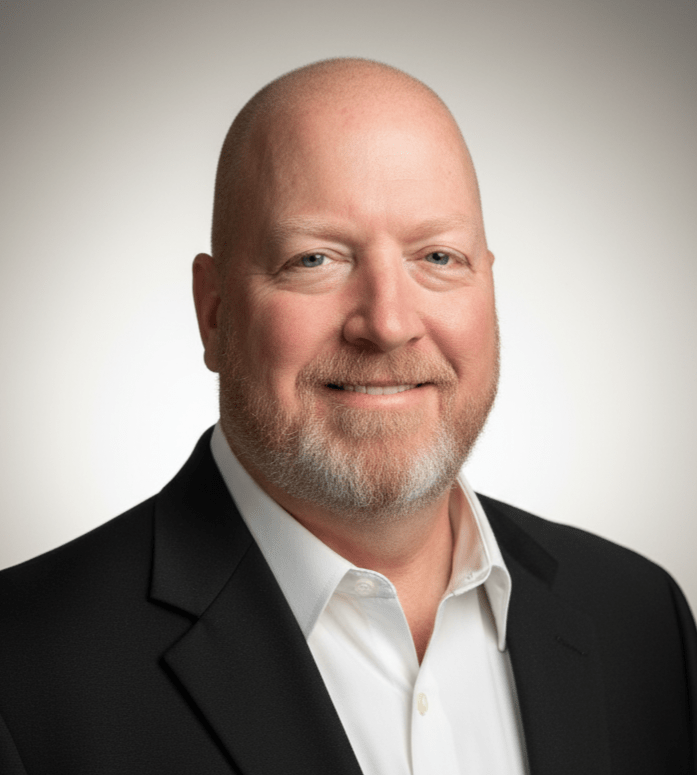
I'm Mike McKenna. I spent nearly two decades conducting white-collar investigations for Fortune 500 companies, overlapping with another two decades in state and federal disaster response.
Two very different worlds, same pattern: the people who held it together were rarely the most technically skilled. They were the ones who could stay steady, say the hard thing, and decide without perfect information.
Nobody teaches that. So I built a place to practice it.
Before you pick one
How long does a Lab take?
Each Lab is built in short topics you can finish in one sitting, usually 5-10 minutes per Topic. The Labs each have a dozen or so topics, so most people work through a full Lab in 1 to 2 hours total. You can do it in one afternoon or fifteen minutes at a time over a month. No cohort, no schedule, no live session to attend.
What happens after I finish?
That's the part that isn't measured in hours. The lessons are finite, the practice isn't. For the length of your access you can run the coach as many times as you want, the same hard conversation before Monday's meeting and again the week after. Most people use the coach more than the lessons.
What is the AI coach, exactly?
A practice partner. You run a hard moment against it, it responds like a real person would, and you try again. It is not a chatbot that writes things for you.
Which Lab should I start with?
The one where you nodded most reading the four lines. If two tied, start with Self-Management. It is the foundation the others build on.
Can I add another Lab later?
Yes. Each Lab is sold separately, so you can add one whenever you want. Most people find the second one picks itself, because the cascade shows you where the chain breaks next.
Is my practice session private?
The coach has no memory between sessions. Each time you open it, it starts fresh with no record of anything you discussed before, and it never references a past session. We built it this way on purpose: a practice space should feel safe enough to say the real thing. The coach runs on Google Cloud's enterprise AI platform, which handles data under its own commercial terms.
Is there a certificate?
Yes, and you earn it by passing the assessment.
Pick the one that stings the most.
Not sure where to start? Each Lab has a free 2-minute diagnostic quiz that names your specific gap.